Year-round automated greenhouses
Year-round automated greenhouses – a stable cycle whatever the season
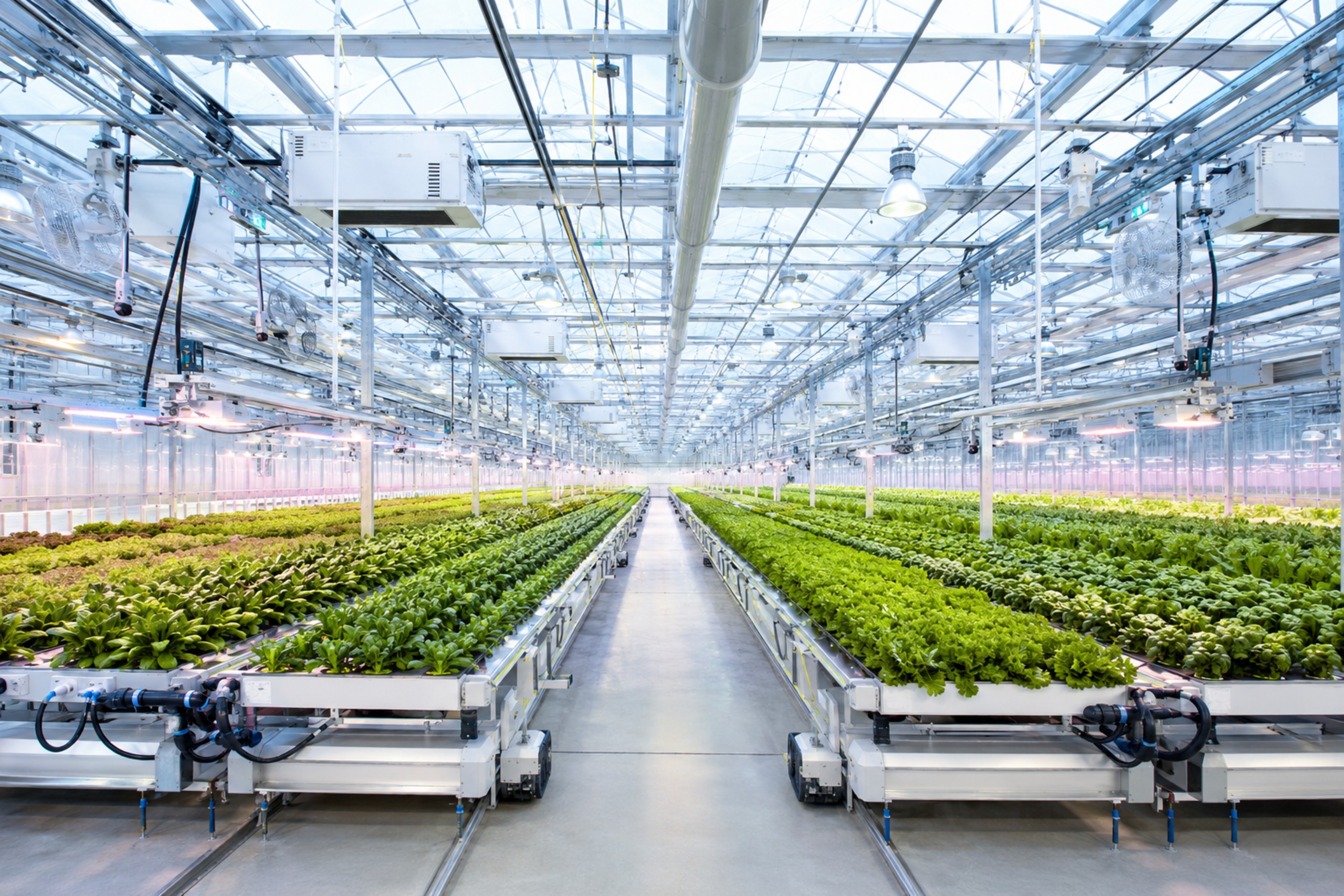
A year-round greenhouse works as a single engineering facility: the structure, heating, ventilation, cooling, supplementary lighting, irrigation and automation are designed together. This format is needed when a farm plans winter production, continuous supplies or production with strict microclimate requirements.
The equipment package is selected to suit the crop, the area, the region and the available energy resources. The aim of the project is not simply to install equipment, but to link the systems into a controllable circuit with redundancy, automatic scenarios and the ability to operate steadily throughout the year.
What this solution is suited for
Design and construction of a new industrial facility on a prepared site
Adding phases, new crops, engineering modules or production areas
A complex with its own boiler house, grading, packing, warehouse and logistics
Developing a concept with an assessment of profitability, payback period and project potential
Developing a production programme that accounts for regional demand, support measures and investment potential
Reviewing the original solutions, adjusting the equipment package and improving efficiency
Key advantages of the complex
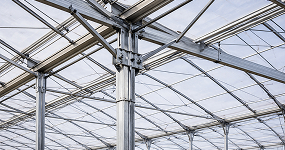
Precise load calculations for your construction area
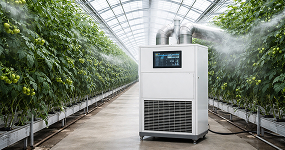
Temperature, humidity and ventilation kept within set parameters
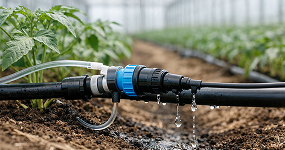
Stable plant nutrition without wasting water or fertilizer

Lower running costs through properly selected systems and materials
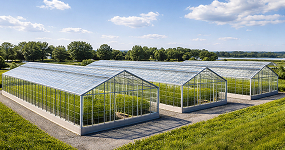
The project expands in phases without rework

Technical supervision and stage-by-stage acceptance

Support after launch: maintenance, diagnostics, recommendations
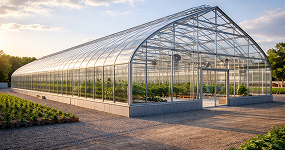
We do not just erect a frame — we bring the facility into operation
What a greenhouse complex includes
Included in the base project:
- ✓ Steel frame with load calculations
- ✓ Covering (film / glass / polycarbonate)
- ✓ Ventilation systems
- ✓ Heating systems and boiler equipment
- ✓ Irrigation and fertigation
- ✓ Automation and electrical equipment
Selected individually:
- + Supplementary lighting
- + Screening system
- + Logistics areas and vestibules
- + Coconut substrate
- + Hydroponics
- + Reservoir for rainwater storage
- + Additional engineering modules
- + Service hatches
- + Service area
- + Fifth-generation systems
Get the cost of your project
What the project cost depends on:How we work


Projects we have built
Here you can see a selection of the projects we have delivered.


Other greenhouses

Designed and manufactured to order using high-tech equipment and the Dutch system.

Larger and more productive than backyard greenhouses.

Designed for year-round commercial growing of crops over large areas.
When a year-round industrial greenhouse is needed
This solution is chosen for a continuous cycle, winter production, contract supplies and the growing of vegetables, herbs, flowers, seedlings and planting material. A winter industrial greenhouse is required when a seasonal structure cannot maintain the set temperature, humidity and light conditions. The production schedule, the number of zones and the available energy resources are taken into account.
What makes a greenhouse a year-round one
Year-round operation is ensured by a coordinated engineering system. Separate systems without a common design calculation will not provide a stable microclimate.
Heating and the thermal circuit
Based on the heat loss calculation, the heat source, the pipework layout, the number of circuits and the distribution of capacity between zones are determined. Turnkey heated greenhouses are equipped with regard to the type of fuel and to redundancy. If a turnkey heated greenhouse is required, the capacity is determined once the input data has been received.
Ventilation, cooling and humidity control
Greenhouses with ventilation are fitted with vents, drives, fans and sensors. Greenhouses with automatic ventilation regulate air exchange according to temperature, humidity, wind and precipitation. Cooling and humidity control are added where necessary.
Supplementary lighting and light regime control
Greenhouses with lighting require a lighting design calculation. It determines the type and placement of the luminaires, the photoperiod and the load on the power supply. The capacity depends on the crop and on the available daylight.
Irrigation, fertigation and drainage
Greenhouses with automatic irrigation are equipped with pumps, filters, tanks and fertiliser dosing units. The composition of the fertigation and drainage systems depends on the crop, the substrate and the growing technology.
Automation and supervisory control
Automated greenhouses combine sensors, controllers and actuators. The climate computer runs scenarios, raises alarms and keeps a log. Greenhouses with intelligent control may include remote monitoring and SCADA, but still require staff involvement.
Levels of automation of a greenhouse complex
| Level | Composition | Purpose |
|---|---|---|
| Basic | Separate control of systems | Simple regimes and a small number of zones |
| Climate control | Sensors, climate computer, common algorithms | A year-round greenhouse complex with several zones |
| Supervisory control | Log, alarms, remote monitoring, SCADA | Large facilities with special requirements |
Greenhouses with automatic climate control are equipped according to the number of zones and the redundancy requirements.
To select the equipment package, send us the crop, the area, the region and details of the utilities.
How a year-round greenhouse differs from a closed-loop greenhouse
A year-round greenhouse may use ordinary air exchange without full air tightness. Turnkey closed-loop greenhouses belong to a narrower class of 4th and 5th generation solutions with in-depth control of the air environment.
Which structures are suitable for year-round operation
The choice depends on the crop, the area, the climate and the service life. Industrial film greenhouses can operate all year round with a properly calculated thermal circuit. Venlo glass industrial greenhouses are used for large intensive projects. The format is chosen according to the loads, the energy consumption and the requirements of the crop.
What the cost of a year-round heated greenhouse depends on
| Factor | What is taken into account |
|---|---|
| Area and structure | Configuration, covering, number of zones |
| Region and heating | Heat load, energy source, redundancy |
| Ventilation and cooling | Crop, humidity, summer temperatures |
| Supplementary lighting | Photoperiod, luminaires, grid capacity |
| Irrigation | Water, substrate, fertigation, drainage |
| Automation | Sensors, controllers, scenarios |
| Installation and logistics | Site conditions and remoteness |
The budget is calculated once the structure, the heat load, the engineering systems and the installation conditions have been determined.
How energy efficiency and reliability are built in
Losses are reduced by screens, sealing, zoning and sensor-based control. Reliability is increased by backup pumps, power and communication sources, emergency alarms and service access.
What data is required for the calculation
- crop, area, region and operating schedule
- heat source, electrical capacity and water
- growing technology, supplementary lighting and drainage
- number of zones, level of automation and redundancy
- project deadlines
Questions and answers
A film or glass structure is chosen after calculating the loads, the heat losses and the requirements of the crop.
Yes, if the frame, the covering and the utilities allow engineering systems to be installed.
No. The need for it is determined by the crop, the region, the schedule and the lighting design calculation.
Sensors, controllers, a climate computer, drives, alarms, a log and remote access — depending on the equipment package.
The outdoor temperature, the area, the covering, the indoor regime, the screens and the capacity reserve are taken into account.
Our contacts
Head office
- Moscow, Serebryakova proezd 14/15, office 10205
- info@nivagreentech.com
CEO — Elnur Abdullaevich Musaev
Get directions →Makhachkala branch
- Makhachkala, Rasula Gamzatova St. 12
- @ makhachkala@nivagreentech.com
Branch manager — Magomed Gadzhiev
Get directions →Far East office
- Vladivostok, Svetlanskaya St. 45
- @ vladivostok@nivagreentech.com
Head of division — Sergey Ivanov
Get directions →Tashkent office
- Tashkent, Amir Temur St. 107
- @ uz@nivagreentech.com
Representative — Alisher Karimov
Get directions →