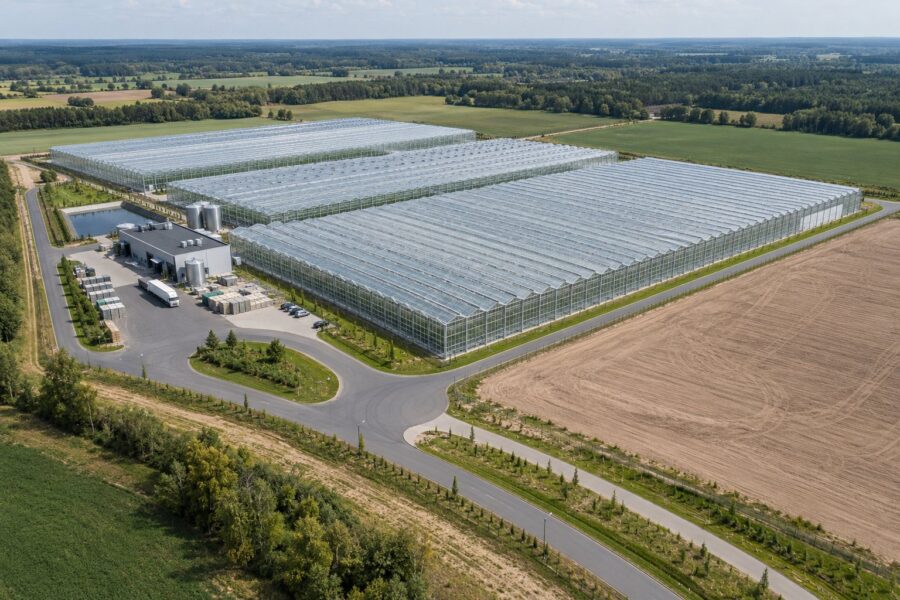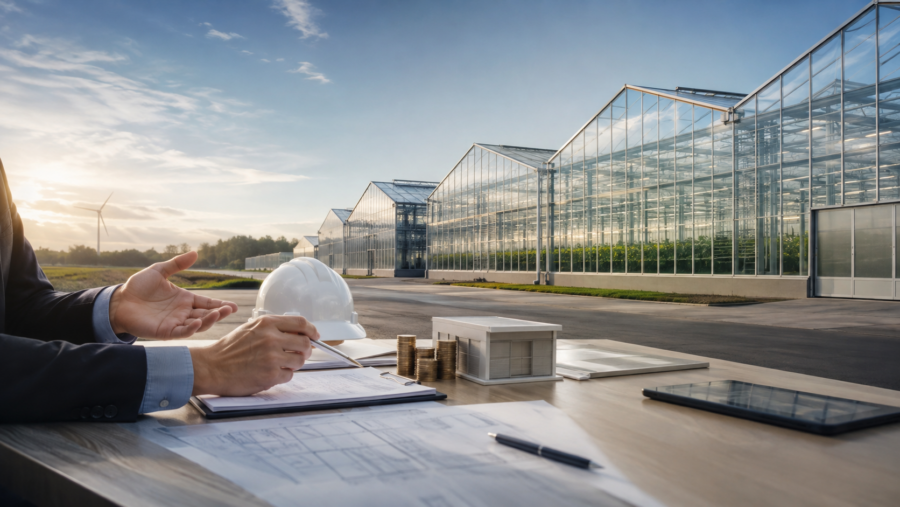
There is no single answer as to which is more cost-effective: the decision depends on the condition of the existing structure, the remaining service life of the engineering systems and the goals of the business. If the basic infrastructure is fit for further operation, some of the tasks can be solved by re-equipping. If the frame, layout or utility capacity impose serious constraints, it makes more sense to consider a new facility.
When modernisation is justified
Modernising a greenhouse complex makes sense when the existing greenhouse still has a sound base and the main problems concern individual components or outdated equipment. For example, a business may keep its existing areas but renew the covering, the climate equipment or the automation.
This scenario is especially relevant when the production task has changed without the need to replace the facility entirely. For example, the farm wants better control over the microclimate, a different operating mode or greater efficiency in individual processes.
Before a decision is made, the technical condition of the structure has to be assessed. It is important to understand how sound the frame, foundations, covering and existing utility networks are, and whether the structure can take new equipment.
What can be modernised in an operating greenhouse
Re-equipment does not have to cover the whole facility at once. The scope of work is defined after a survey and a comparison of the current condition with the goals of the business.
Depending on the situation, the options include:
- renewing or replacing the covering;
- strengthening or repairing individual frame elements;
- modernising the heating;
- changing the irrigation and fertigation scheme;
- upgrading the ventilation;
- installing or replacing automation;
- adding supplementary lighting;
- changing individual production areas.
The key is to assess these solutions together. For example, installing new climate equipment changes the requirements for the power supply and automation. A new covering may affect the light regime and the further operation of the complex.
Covering and frame
Replacing the greenhouse covering can solve some operating problems, but the condition of the load-bearing elements must be checked before the work starts. If the frame is damaged, worn or not designed for the intended changes, a new covering alone will not be enough.
Repairing a greenhouse frame cannot be treated as a separate construction job without assessing the whole structure either. If strengthening or the installation of additional equipment is planned, the permissible loads and the condition of the existing elements must be checked.
In some cases the survey shows that the structure can be kept and renewed. In others, restoring individual elements does not solve the problem of the remaining service life of the whole building.
Engineering systems
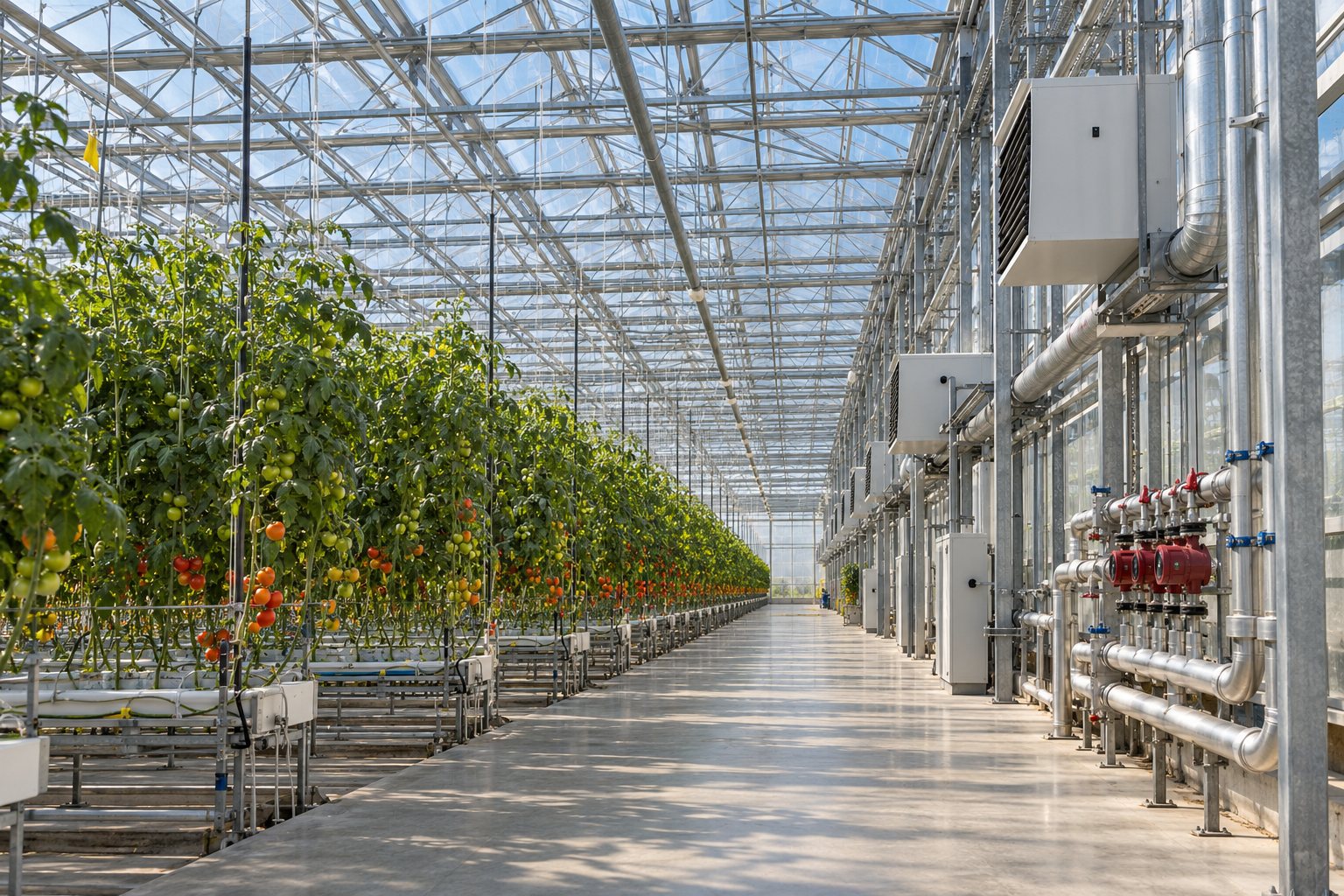
Engineering equipment determines a large part of what an operating greenhouse is capable of. Heating, ventilation, irrigation, automation and supplementary lighting do not work in isolation, so replacing one component may require adjustments to the others.
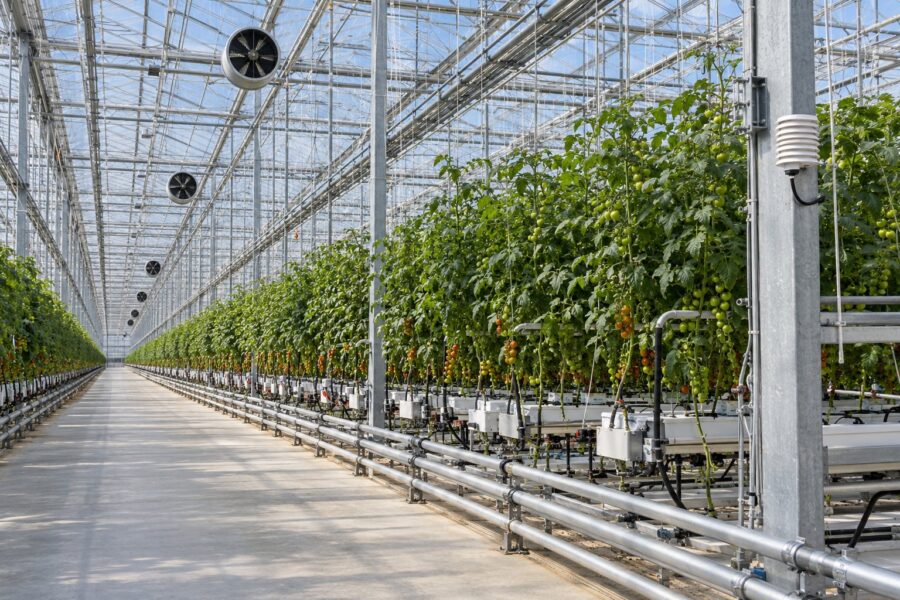
For example, upgrading the automation makes it possible to control the equipment differently, while installing supplementary lighting requires an assessment of the power supply and the existing control system. If the growing technology changes, irrigation, fertigation and the climate regime may need to be revised.
Supplementary lighting, climate control and automation can be installed in an operating complex. The set of solutions is determined by the goals of the specific facility.
That is why greenhouse equipment modernisation should start not with the choice of an individual device but with an analysis of the whole system.
When it is better to build a new complex
New construction becomes the better-founded option when the existing facility limits the production task and cannot be adapted in a reasonable way.
This option is worth considering if:
- the frame and other main components are close to the end of their service life;
- the planned output differs significantly from what the existing structure can deliver;
- the engineering systems cannot provide the required operating mode;
- the layout does not suit the new technology;
- the height, spans or production areas need to change substantially;
- the existing utilities have no spare capacity;
- reconstruction would require a large number of interrelated alterations.
It is not only the volume of future work that matters. If modernisation gradually turns into replacing most of the structures and engineering, its cost and timing should be compared with building a new facility.
A new project also makes it possible to build in the required output, process areas and expansion prospects from the start. In design, these parameters are considered together with the site, the climate and the operating mode.
How to compare the two scenarios
Comparing modernisation and new construction only by the initial cost is not correct. The option that is cheaper at the start may require additional work during operation or limit the further development of production.
For the comparison, it is worth assessing:
| Criterion | Modernisation | New complex |
| Existing frame | Can be kept if its technical condition allows | Designed from scratch for the task |
| Engineering | Partly reused or re-equipped | Selected as a complete system |
| Layout | Limited by the existing structure | Developed for the technology |
| Production downtime | May be needed for individual areas or for the duration of the work | Determined by the launch plan of the new facility |
| Output | Depends on the capabilities of the existing structure | Set at the design stage |
| Expansion | Limited by the existing site and structure | Can be built into the project concept |
| Life cycle | Determined by the remaining service life of the components | Calculated for the new facility |
The cost of downtime has to be considered separately. If the operating greenhouse generates revenue, a temporary shutdown of individual areas may matter economically. The scale of the work and whether it can be done in stages are determined only after a survey.
Modernisation should not be called cheaper or faster in advance. A final comparison requires a technical assessment, an estimate and an understanding of the result the owner needs.
What data is needed for the decision
Before choosing between reconstruction and new construction, initial data on the operating facility and the future production task must be collected.
A preliminary assessment requires:
- the area and layout of the existing greenhouse;
- the age and technical condition of the frame and covering;
- information on the foundations and previous repairs;
- the existing engineering equipment;
- available electrical, water and heat capacities;
- the crops grown and the current technology;
- current and target output;
- a list of the required changes;
- plans for expanding production;
- the acceptable shutdown regime during the work.
The more detailed the initial data, the more accurately the scope of modernisation can be defined. If documentation for the old facility has survived, it should also be given to the designer.
How to move from assessment to a project
The decision between modernisation and new construction is best made after a technical survey. At this stage the condition of the structure, engineering systems and layout is compared with the goals of the business.
Next, the technical solution is developed and the scope of work is defined. For modernisation this may mean replacing individual components, re-equipping the engineering systems or a full reconstruction. For a new facility, a separate concept is developed that takes into account the crop, area, site, climate and operating mode.
Design is the technical basis not only for a new complex but also for an expansion or modernisation. The project fixes the structure, engineering systems, layout and process areas.
If the survey shows that it is reasonable to keep the existing structure, you can move on to the calculation and specification of the modernisation work. If the facility’s constraints are too great, the next step is to develop a new solution. The condition of an operating greenhouse, the goals of re-equipment and the possible project format can be discussed with NIVA GREENTECH specialists. The company carries out both the construction of new complexes and reconstruction and modernisation work.