Greenhouses for vegetable crops
Greenhouses for vegetable crops – a solution for a specific crop and technology
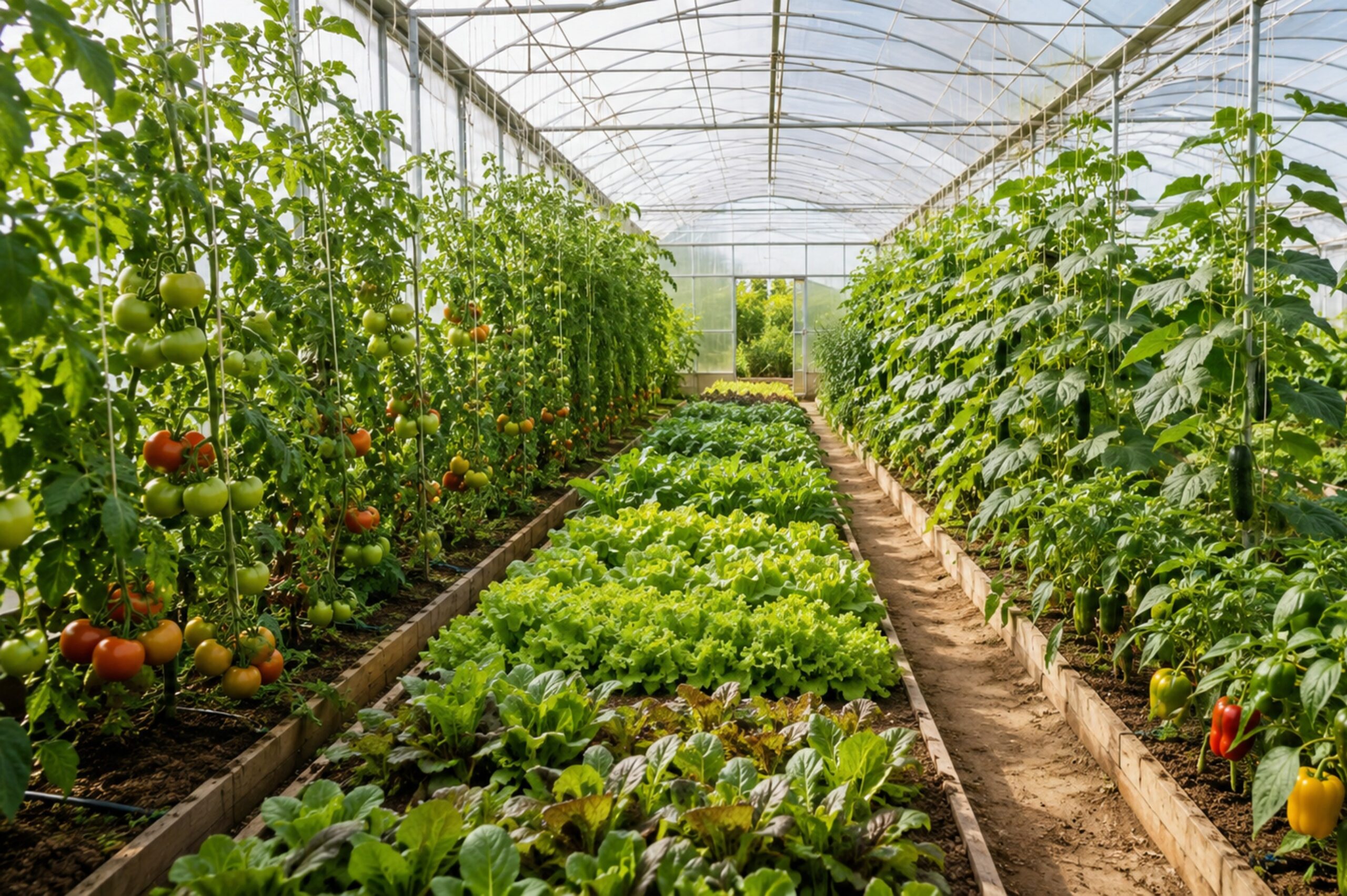
Industrial vegetable greenhouses are designed not to a universal template but for the crop, the seasonality and the planned growing technology. Cucumbers, tomatoes, peppers, leafy greens and lettuce need different regimes of air exchange, humidity, lighting and nutrition, so the same frame can receive completely different engineering equipment.
The design takes into account the area and region, crop height, the growing scheme, heating, ventilation, irrigation and fertigation, supplementary lighting and the level of automation. As a result, the farm gets a working greenhouse system built around its own production cycle rather than a collection of unrelated equipment.
What this solution is suited for
Design and construction of a new industrial facility on a prepared site
Adding phases, new crops, engineering modules or production areas
A complex with its own boiler house, grading, packing, warehouse and logistics
Developing a concept with an assessment of profitability, payback period and project potential
Developing a production programme that accounts for regional demand, support measures and investment potential
Reviewing the original solutions, adjusting the equipment package and improving efficiency
Key advantages of the complex
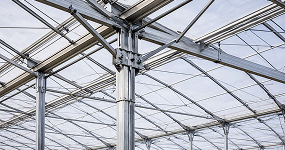
Precise load calculations for your construction area
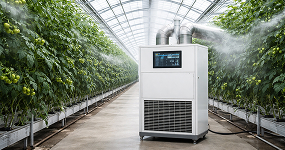
Temperature, humidity and ventilation kept within set parameters
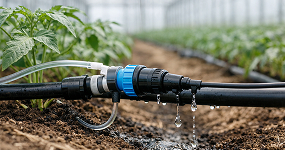
Stable plant nutrition without wasting water or fertilizer

Lower running costs through properly selected systems and materials
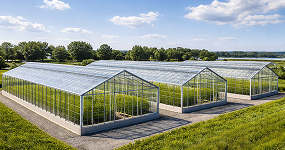
The project expands in phases without rework

Technical supervision and stage-by-stage acceptance

Support after launch: maintenance, diagnostics, recommendations
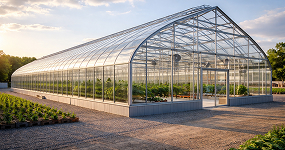
We do not just erect a frame — we bring the facility into operation
What a greenhouse complex includes
Included in the base project:
- ✓ Steel frame with load calculations
- ✓ Covering (film / glass / polycarbonate)
- ✓ Ventilation systems
- ✓ Heating systems and boiler equipment
- ✓ Irrigation and fertigation
- ✓ Automation and electrical equipment
Selected individually:
- + Supplementary lighting
- + Screening system
- + Logistics areas and vestibules
- + Coconut substrate
- + Hydroponics
- + Reservoir for rainwater storage
- + Additional engineering modules
- + Service hatches
- + Service area
- + Fifth-generation systems
Get the cost of your project
What the project cost depends on:How we work


Projects we have built
Here you can see a selection of the projects we have delivered.


Other greenhouses

Designed and manufactured to order using high-tech equipment and the Dutch system.

Larger and more productive than backyard greenhouses.

Designed for year-round commercial growing of crops over large areas.
Which vegetable crops are grown commercially
The following are grown commercially under cover:
- Cucumber – needs stable humidity and ventilation without draughts
- Tomato – sensitive to condensation, needs active air exchange
- Pepper and aubergine – warmth-loving, do not tolerate sharp temperature swings
- Leafy greens and lettuce – short cycle, high density, often hydroponics
- Seedlings for later planting out in another block of the complex
How to match the structure to the crop
The choice starts from the crop segment and the planned operating mode. The main parameters are ridge height, air volume, the air exchange scheme, heating and the accuracy of drip feeding. Specific temperature and humidity values are fixed in the design.
| Crop | What matters for the microclimate | Engineering | Format |
|---|---|---|---|
| Cucumber | Stable humidity, even temperature, no draughts | Heating, ridge and side ventilation, drip feeding | Multi-span film; Venlo for intensive technology |
| Tomato | Moderate humidity, intensive air exchange, good light | Heating, air exchange, fertigation; year-round – supplementary lighting and CO2 | Multi-span film; Venlo for large projects |
| Pepper | A warm, stable microclimate, protection from swings | Heating, gentle ventilation, drip feeding | Multi-span film; Venlo for intensive growing |
| Leafy greens and lettuce | Short cycle, even lighting, stable temperature | Hydroponic feeding, supplementary lighting, automation | Venlo; film for tray growing |
| Seedlings | A stable warm temperature, a careful regime, lighting | Heating, supplementary lighting, drip feeding | A seedling block within the complex |
Greenhouses for cucumbers
Cucumbers do not tolerate temperature swings or sudden changes in humidity well, and the root zone needs a constant supply of oxygen. Air exchange has to remove excess humidity without creating a draught through the crop. Industrial cucumber growing uses a high trellis system, stable heating, ridge and side ventilation and drip feeding with fertigation. Year-round technology adds supplementary lighting and CO2 enrichment. A multi-span film greenhouse covers most cucumber requirements, while large intensive projects go for Venlo.
Greenhouses for tomatoes
Tomatoes react worse to condensation and constantly high humidity. The air has to change more actively, and the difference between day and night temperatures must be kept within a narrow band. Heating and air exchange are specified with spare capacity, and automation runs the regime to a schedule. Medium volumes of tomatoes are grown in multi-span structures, while large intensive sites more often go for Venlo with precise climate control.
Greenhouses for peppers, leafy greens and lettuce
Pepper is close to tomato in its regime but more sensitive to sudden swings. It needs an even, warm microclimate and protection from cold air during flowering. The equipment shifts towards controlled heating and gentle air exchange.
Leafy greens and lettuce work differently: a short cycle, low planting, trays or hydroponics and high density per square metre. For them, Venlo with precise climate control and stable supplementary lighting is chosen more often. A multi-span film layout also works with the right row planning.
Which types of structure suit vegetable crops
Three formats are most often considered for industrial production of fresh vegetables: multi-span film, a Venlo glass complex and a polycarbonate solution.
| Format | When it fits | Limitations |
|---|---|---|
| Multi-span film | Medium and large farms; cucumber, tomato, pepper, leafy greens, seedlings | The film has to be replaced on schedule; year-round technology needs well-designed heating |
| Venlo glass complex | Large intensive projects, year-round production, high automation | Higher initial investment and a separate budget for engineering |
| Polycarbonate | Specific scenarios that require a rigid covering | Suitability for the particular variety should be confirmed before design |
The structures are described in more detail in separate sections: industrial film greenhouses and Venlo glass industrial greenhouses. The format is chosen according to the variety, the area, the region and the operating mode.
Engineering systems for vegetable crops
Greenhouses for fresh vegetables are designed together with their engineering systems. Whether the facility can run year-round depends on how these are selected.
- Heating and ventilation keep temperature and humidity within the working band
- Irrigation and fertigation deliver water and nutrient solution to the root zone for substrate or hydroponics
- Drainage removes excess solution and reduces the risk of standing water
- Automation and climate control bring the engineering together into a single control loop
- Supplementary lighting and CO2 enrichment are needed for intensive cucumber, tomato and leafy green growing
- Energy-saving screens stabilise the regime and reduce heat loss
Some systems are not needed for a short seasonal cycle. A year-round cycle without the full set noticeably loses yield stability.
What determines the cost of a vegetable greenhouse
There is no universal price: the budget is made up of several groups of factors.
| Factor | How it affects the budget | What to clarify |
|---|---|---|
| Variety and technology | Cucumber, tomato and leafy greens need different engineering and height. Hydroponics changes the root-zone equipment | Variety, growing scheme, turnover |
| Area and layout | A large block lowers the unit cost but raises the engineering requirements | Total area, plot shape |
| Frame and covering | Steel grade, column spacing, covering type and corrosion protection affect service life | Load region, covering type |
| Heating | A significant budget factor for year-round technology | Seasonality, heat source |
| Irrigation and fertigation | Feeding accuracy sets the technology class | Substrate type, production volume |
| Automation and supplementary lighting | Determine whether the facility can run without a manual operator | Operating mode, lighting scheme |
| Installation and logistics | Delivery and commissioning depend on the region | Site address, access for machinery |
The exact estimate is fixed once the initial data is available: there is no universal price per m² without inputs.
What data is needed for the estimate
- The variety or varieties you plan to grow
- Planned production area and the site
- Construction region and snow and wind loads
- Seasonality: short cycle, semi-seasonal or year-round production
- Growing scheme: substrate, hydroponics, trays, trellis
- Available utilities: electricity, water, gas or alternative heat sources
- Requirements for engineering systems: heating, air exchange, irrigation, fertigation, automation
- Target launch date
Based on these inputs, the greenhouse complex design is carried out: load calculations, structure selection, the set of engineering systems and the scope of work.
Questions and answers
Our contacts
Head office
- Moscow, Serebryakova proezd 14/15, office 10205
- info@nivagreentech.com
CEO — Elnur Abdullaevich Musaev
Get directions →Makhachkala branch
- Makhachkala, Rasula Gamzatova St. 12
- @ makhachkala@nivagreentech.com
Branch manager — Magomed Gadzhiev
Get directions →Far East office
- Vladivostok, Svetlanskaya St. 45
- @ vladivostok@nivagreentech.com
Head of division — Sergey Ivanov
Get directions →Tashkent office
- Tashkent, Amir Temur St. 107
- @ uz@nivagreentech.com
Representative — Alisher Karimov
Get directions →