Isolation tunnels for plant breeding
Isolation tunnels — controlled breeding on trial and seed production plots
An isolation tunnel shields a breeding plot from unwanted pollen transfer and from pollinating insects. Breeding stations, research institutes and seed companies use this solution when it is important to keep a line pure and to control crossing without building a permanent greenhouse facility.
The configuration is selected to match the crop, the size of the plot, the wind load and the required level of isolation. The design defines the frame, the anchoring, the type of film or netting, the mesh size and the layout of access and ventilation.

What this solution is suited for
Design and construction of a new industrial facility on a prepared site
Adding phases, new crops, engineering modules or production areas
A complex with its own boiler house, grading, packing, warehouse and logistics
Developing a concept with an assessment of profitability, payback period and project potential
Developing a production programme that accounts for regional demand, support measures and investment potential
Reviewing the original solutions, adjusting the equipment package and improving efficiency
Key advantages of the complex
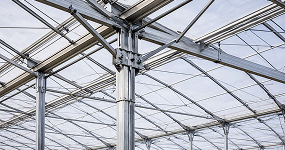
Precise load calculations for your construction area
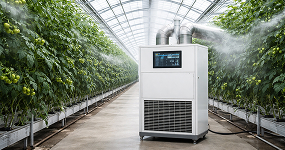
Temperature, humidity and ventilation kept within set parameters
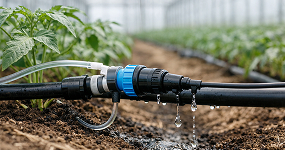
Stable plant nutrition without wasting water or fertilizer

Lower running costs through properly selected systems and materials
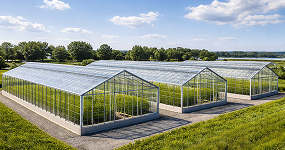
The project expands in phases without rework

Technical supervision and stage-by-stage acceptance

Support after launch: maintenance, diagnostics, recommendations
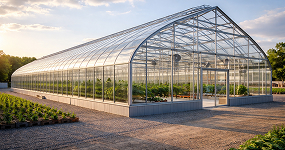
We do not just erect a frame — we bring the facility into operation
What a greenhouse complex includes
Included in the base project:
- ✓ Steel frame with load calculations
- ✓ Covering (film / glass / polycarbonate)
- ✓ Ventilation systems
- ✓ Heating systems and boiler equipment
- ✓ Irrigation and fertigation
- ✓ Automation and electrical equipment
Selected individually:
- + Supplementary lighting
- + Screening system
- + Logistics areas and vestibules
- + Coconut substrate
- + Hydroponics
- + Reservoir for rainwater storage
- + Additional engineering modules
- + Service hatches
- + Service area
- + Fifth-generation systems
Get the cost of your project
What the project cost depends on:How we work


Projects we have built
Here you can see a selection of the projects we have delivered.


Other greenhouses

Designed and manufactured to order using high-tech equipment and the Dutch system.

Larger and more productive than backyard greenhouses.

Designed for year-round commercial growing of crops over large areas.
What isolation tunnels do in plant breeding
Isolation tunnels for plant breeding solve a narrow but critical set of tasks:
- Pollen isolation of parent lines and control of cross-pollination
- Protection of the plot from invasive insects that carry pollen or viruses
- A controlled environment for hybridization and inbreeding
- Preservation of varietal purity when propagating elite and original seed material
- Isolation when working with pollinating insects (bumblebees, bees) — keeping the required population inside
- Maintaining phytosanitary control at an experimental station
This is not growing for the sake of a harvest: it is breeding and seed production work. The purity of a line, the patentability of a variety and the quality of subsequent generations depend directly on which isolation tunnel stands over the plot.
Design solutions
An isolation tunnel is simpler than a full greenhouse, but it has its own requirements for the frame, the covering and the access points.
Frame (galvanized steel, hoops, anchoring)
The basic frame is assembled from galvanized steel hoops, with a spacing calculated for the wind load of the region. Anchoring is done with ground screws or driven anchors; seasonal structures need no concrete foundation. This makes it possible to dismantle the tunnel after harvesting and move it to another plot the following season.
Covering (film, shade netting, insect-proof netting)
The covering is chosen to match the task:
- Light-stabilized PE or EVA film — for pollen isolation and for maintaining the microclimate
- Insect-proof netting with a 0.4–0.6 mm mesh — to isolate the plot from thrips, aphids and small pollinators
- Fine 0.2 mm thrips-proof netting — where protection against the smallest insects is critical
- Shade netting — for shading and for reducing the wind load on the crop
The mesh size and the type of material are selected together with the breeding agronomist: no netting provides 100 % isolation in principle — what matters is matching the mesh to the target insect groups and the type of pollen.
Dimensions (standard sizes, span increments)
Isolation tunnels are supplied in standard spans with fixed length increments. The usual range is:
- Width — 3, 4, 6 or 8 m
- Length — in increments of 2 or 3 m, standard sections of 12, 24 and 36 m
- Ridge height — 2.5–4 m depending on the crop
For non-standard plots an individual layout is calculated.
Access and ventilation (doors, vents, airlocks)
Isolation must be maintained every time staff enter. The standard set includes:
- End doors with sealing and insect mesh
- An airlock with two barriers where the plot is particularly sensitive
- Side vent ventilation with insect-proof netting
- Where required, ridge ventilation with automatic opening
Joints and seams are made so that no gaps remain: otherwise the isolation only works on paper.
Use by crop
Requirements for an isolation tunnel differ from crop to crop. The table below gives breeders a general guide.
| Crop | Type of covering | Mesh size | Notes |
|---|---|---|---|
| Tomato, pepper, aubergine | PE film + netting | 0.4–0.6 mm | Bumblebee-assisted isolation possible |
| Cucumber, cucurbits | Insect-proof netting | 0.4 mm | Control of cross-pollination |
| Brassicas | Film + fine netting | 0.2–0.4 mm | Protection against flea beetle |
| Sunflower, maize | Netting + individual flower isolators | 0.4–0.6 mm | For parent lines |
| Strawberry, berry crops | Netting + shading | 0.6 mm | For mother plants and elite material |
| Cereals on primary seed production plots | Netting | 0.4–0.6 mm | Protection of F1 and F2 |
The exact set of materials and components is agreed with the breeder and the phytosanitary service.
Questions and answers
Our contacts
Head office
- Moscow, Serebryakova proezd 14/15, office 10205
- info@nivagreentech.com
CEO — Elnur Abdullaevich Musaev
Get directions →Makhachkala branch
- Makhachkala, Rasula Gamzatova St. 12
- @ makhachkala@nivagreentech.com
Branch manager — Magomed Gadzhiev
Get directions →Far East office
- Vladivostok, Svetlanskaya St. 45
- @ vladivostok@nivagreentech.com
Head of division — Sergey Ivanov
Get directions →Tashkent office
- Tashkent, Amir Temur St. 107
- @ uz@nivagreentech.com
Representative — Alisher Karimov
Get directions →