High tunnels for berries
High tunnels for berries — a protected crop and a season you control
High berry tunnels reduce the dependence of the crop on rain, wind and sudden weather changes without building a permanent heated complex. The format suits strawberries, raspberries, blueberries and other crops where protecting the plants, ventilating them and controlling the timing of the season all matter.
The configuration is calculated for the crop, the row width, the machinery, the terrain and the wind load of the site. These inputs determine the height and width of the tunnel, the anchoring, the type of covering, ventilation, drainage and the choice of end-wall solutions.

What this solution is suited for
Design and construction of a new industrial facility on a prepared site
Adding phases, new crops, engineering modules or production areas
A complex with its own boiler house, grading, packing, warehouse and logistics
Developing a concept with an assessment of profitability, payback period and project potential
Developing a production programme that accounts for regional demand, support measures and investment potential
Reviewing the original solutions, adjusting the equipment package and improving efficiency
Key advantages of the complex
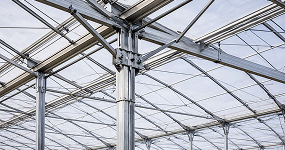
Precise load calculations for your construction area
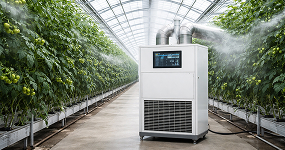
Temperature, humidity and ventilation kept within set parameters
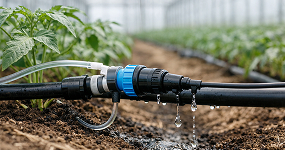
Stable plant nutrition without wasting water or fertilizer

Lower running costs through properly selected systems and materials
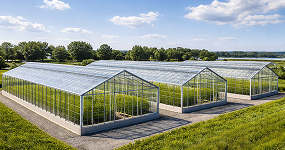
The project expands in phases without rework

Technical supervision and stage-by-stage acceptance

Support after launch: maintenance, diagnostics, recommendations
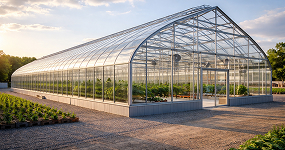
We do not just erect a frame — we bring the facility into operation
What a greenhouse complex includes
Included in the base project:
- ✓ Steel frame with load calculations
- ✓ Covering (film / glass / polycarbonate)
- ✓ Ventilation systems
- ✓ Heating systems and boiler equipment
- ✓ Irrigation and fertigation
- ✓ Automation and electrical equipment
Selected individually:
- + Supplementary lighting
- + Screening system
- + Logistics areas and vestibules
- + Coconut substrate
- + Hydroponics
- + Reservoir for rainwater storage
- + Additional engineering modules
- + Service hatches
- + Service area
- + Fifth-generation systems
Get the cost of your project
What the project cost depends on:How we work


Projects we have built
Here you can see a selection of the projects we have delivered.


Other greenhouses

Designed and manufactured to order using high-tech equipment and the Dutch system.

Larger and more productive than backyard greenhouses.

Designed for year-round commercial growing of crops over large areas.
When high tunnels pay off for berries
High tunnels are used when a farm needs to protect its plantings from rainfall and some adverse weather, extend the working season and make harvesting more predictable. Unlike a permanent greenhouse, a tunnel does not create a fully enclosed climate envelope and usually works without fixed heating.
Matching the geometry to the crop and the technology is particularly important. Strawberries, raspberries and blueberries differ in plant height, row width, the machinery used for servicing and the ventilation they need, so a single size does not suit every farm.
Frame, anchoring and dimensions
The current design uses galvanized steel components, including oval tubing. The frame is installed on ground screws or other calculated supports, with no massive continuous foundation, which simplifies installation and allows the structure to follow the terrain of the site.
Length, width, height and component spacing are determined by the wind load, the row dimensions and the clearance required for machinery. A site in an open wind corridor calls for stronger anchoring and bracing than a sheltered one.
Covering, ventilation and drainage
The main job of the covering is to protect the berries from direct rainfall while keeping air exchange sufficient. For that, the sides are made to open or lift, and the ends are fitted with curtains or manual or electric roller doors.
On long tunnels natural ventilation is planned separately, so that warm humid air does not stagnate inside. The guttering system carries water away between the rows and helps avoid waterlogged areas near the root zone and the service lanes.
Crops that high tunnels are designed for
| Crop | What matters | Layout specifics |
|---|---|---|
| Strawberry | Protection of the berries from rain, ventilation, ease of picking | Low rows, drip irrigation, option for tabletop growing |
| Raspberry | Cane height, trellis, free air exchange | Greater clearance, wide aisles, robust anchoring |
| Blueberry | Container growing, irrigation, protection from rain | Aisles for containers and machinery, drainage, fertigation |
| Other berries and planting material | Seasonality, plant height, row layout | Custom size and choice of end-wall solutions |
What to allow for in the design
- orientation of the tunnels relative to the terrain and the prevailing wind
- row spacing and the dimensions of the machinery
- the anchoring layout and reinforcement of the end sections
- the type of film and the way it is fixed
- side ventilation and the choice of end doors
- drainage between the tunnels
- drip irrigation and fertigation
- the option to expand the facility in phases
What the cost of high tunnels depends on
| Factor | How it affects the budget |
|---|---|
| Area and number of tunnels | Determine the volume of steel, covering and installation work |
| Height and width | Affect steel consumption and wind load |
| Anchoring | Depends on the soil, the wind region and the layout of the site |
| Covering and end walls | Type of film, doors, roller mechanisms, automation |
| Drainage | Gutter material, length of the lines and the drainage layout |
| Irrigation and fertigation | Pumps, filters, mains and dosing units |
| Installation and logistics | Access for machinery, distance and site preparation |
For a berry project it is important to cost not only the frame, but also the way the plants are laid out. The wrong row width or insufficient ventilation usually costs more than adjusting the structure at the design stage.
What data is needed for an estimate
- crop and variety
- area of the site and the number of rows
- row spacing and the dimensions of the machinery
- region and characteristics of the site
- preferred tunnel height and width
- type of covering, doors and drainage
- irrigation and fertigation requirements
- the planned sequence of installation
Questions and answers
Our contacts
Head office
- Moscow, Serebryakova proezd 14/15, office 10205
- info@nivagreentech.com
CEO — Elnur Abdullaevich Musaev
Get directions →Makhachkala branch
- Makhachkala, Rasula Gamzatova St. 12
- @ makhachkala@nivagreentech.com
Branch manager — Magomed Gadzhiev
Get directions →Far East office
- Vladivostok, Svetlanskaya St. 45
- @ vladivostok@nivagreentech.com
Head of division — Sergey Ivanov
Get directions →Tashkent office
- Tashkent, Amir Temur St. 107
- @ uz@nivagreentech.com
Representative — Alisher Karimov
Get directions →