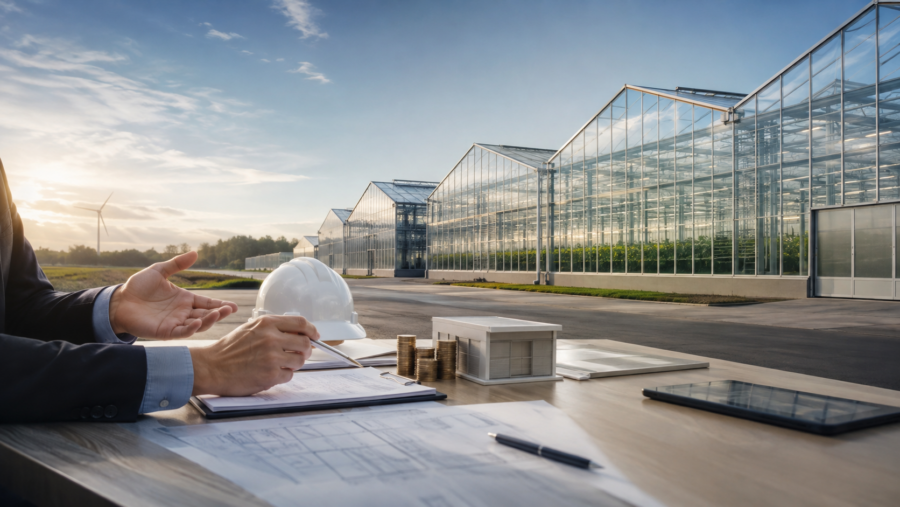
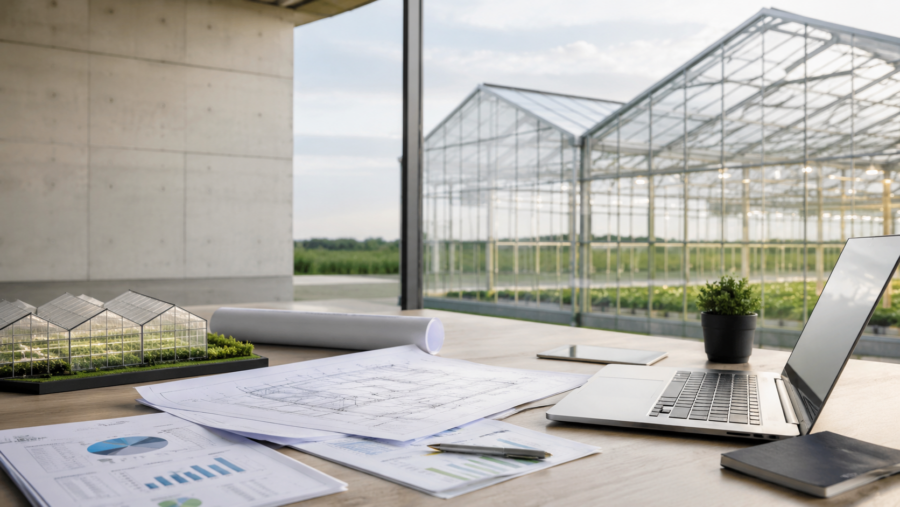
The decision to build a turnkey greenhouse complex is a substantial investment in which every stage matters. Many customers mistakenly assume that the hardest choice is the technology or the crop. In practice, the fundamental basis for the success or failure of the whole project is the choice of contractor.
A mistake in choosing a greenhouse contractor rarely leads to small, easily corrected defects. More often it turns into systemic problems: a budget that grows several times over because of rework, catastrophic delays that cause a sales season to be missed, or chronically high running costs due to suboptimal engineering decisions. That is why the question of how to choose a contractor for a greenhouse cannot be reduced to comparing prices — it requires an analysis of experience, engineering expertise and management processes. Unfortunately, at the selection stage most customers focus mainly on price, turning a blind eye to the overall risks that price may carry.
In this article we give you a structured checklist and an assessment framework that will let you get to know a potential partner, ask the right questions and substantially reduce the likelihood of critical mistakes that could put the whole investment at risk.
Why the choice of contractor is the key factor in a greenhouse project
The competence of a greenhouse contractor directly determines the viability of the whole enterprise. Its influence goes far beyond simply erecting the structures.
First, the contractor has a decisive effect on the final cost of ownership. A low contract price may be achieved with materials of doubtful quality, which will later show up in frequent repairs, high energy consumption and the need to replace the covering prematurely. Second, the quality of construction management determines the launch dates. A delay of 2–3 months in commissioning can mean missing an entire profitable season, wiping out the planned revenue.
Most importantly, the contractor lays the foundation for future operation. The engineering decisions on heating, ventilation, irrigation and power supply made at the design and installation stage predetermine the yield, the cost of production and the daily management workload. Even the most promising project based on advanced technology may fail to «work» and to reach its planned targets because of weak or incompetent execution on site.
Experience and specialisation: what to check first
The first and main rule is that experience in building greenhouse complexes specifically is fundamentally different from experience in general construction. A greenhouse is not a warehouse or a hangar. It is a living technological organism with its own microclimate.
What to check:
- Specialisation. Does the company have proven experience of building a greenhouse complex of the scale and type you need? Delivering several farm greenhouses is not the same as the competence needed to build a commercial complex of a hectare or more;
- Completed facilities. Ask not just for a list but for specific cases with customer contacts for feedback. The best indicator is repeat orders or recommendations from working businesses;
- Climatic experience. Building in the Krasnodar Region and, say, in the Urals means two different sets of engineering tasks (snow and wind loads, energy efficiency). Make sure the contractor has successful experience in your region or a similar one.

Design and engineering expertise
Good design is not a formality for obtaining permits but the foundation of economic efficiency. This is where the future operating costs are decided.
Pay attention to the following:
- The source of the design. Does the contractor carry out the design with its own engineering department or outsource it? The first option as a rule provides better alignment between design, manufacturing and installation, and allows changes to be made promptly;
- Depth of expertise. Are the sections on the key systems (heating, ventilation, power supply, water treatment) worked out in enough detail? The design should be an individual calculation for your tasks, crop, site topology and local resources, not a set of standard solutions;
- Link to operation. Does the designer discuss the future production processes with you? A good design is always created with an eye to convenient and economical daily work, not only to reducing capital costs.
Production capability and the supply chain
Stability and quality at the supply stage are the key to keeping the schedule and to the durability of the facility.
When assessing, ask:
- The origin of the structures. Does the contractor have its own production of steel structures and frames? This gives maximum control over quality and manufacturing times and allows non-standard tasks to be solved quickly. If an outside supplier is used, it is important to understand how stable that relationship is and how incoming inspection is carried out;
- Logistics. How is the delivery of materials and equipment to the site organised? Logistics failures are one of the common causes of downtime on site. A transparent supply scheme should be part of the contract;
- Dependency risks. How dependent is the contractor on a single supplier of critical components (film or boiler equipment, for example)? A diversified supply chain reduces the risks for your project.
Construction management and timelines
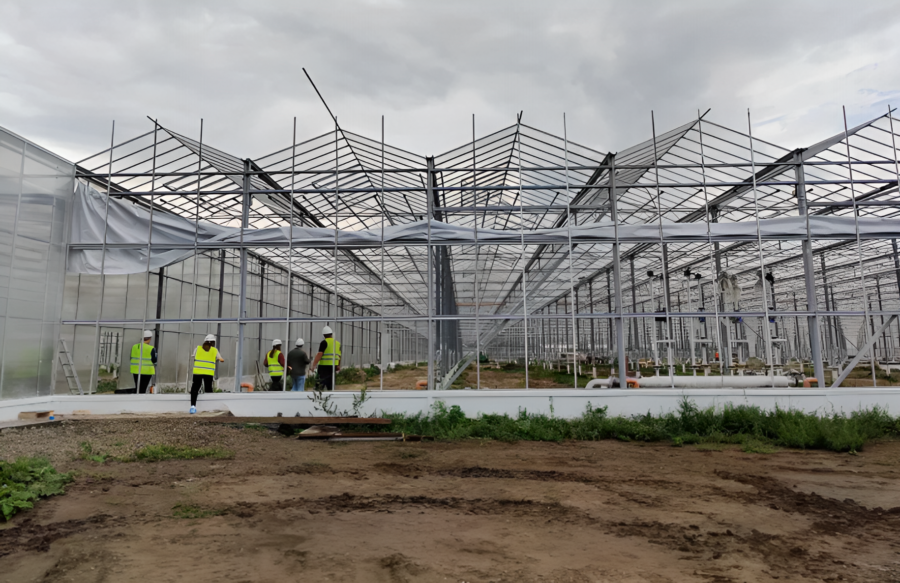
A clear plan and professional management are what characterise a systematic contractor. Clarify with the contractor:
- A detailed schedule. Does it provide a detailed stage-by-stage programme of work linked to payments? It should clearly mark the control points (completion of the foundation, erection of the frame, commissioning of the systems);
- Process management. How is the interaction organised between the design team, production, installation crews and subcontractors? Chaos on the site is a direct route to missed deadlines and overspending;
- Typical risks. What measures does it take to minimise the typical causes of delay (weather, customs delays, the human factor)?
Financial model and contract terms
A transparent and balanced contract is your main legal protection.
Study and discuss carefully:
- The structure of the contract. Is it a works contract with a fixed budget and scope, or a framework agreement with payment on a cost basis? The first option is preferable for the customer;
- The payment schedule. Are the stage payments tied to the physical completion and acceptance of specific work rather than to calendar intervals?
- Allocation of risks. How does the document set out liability for missed deadlines, the procedure for approving additional work and force majeure? All the key conditions have to be fixed before construction starts.
Warranties, service and responsibility after handover
A contractor’s attitude to after-sales support says a lot about its confidence in the quality of its work and its interest in a long-term relationship. Find out:
- Warranty obligations. Which elements and systems are covered by the warranty, and for how long (1 year is standard, 3–5 years is a sign of confidence)? How is the process of rectifying warranty defects organised?
- Service support. Does the contractor offer commissioning, training of your staff and technical support while the facility reaches its design capacity? The absence of such service is a hidden risk that can lead to long downtime at the very start of operation;
- Involvement in the launch. Is the contractor’s engineering department ready to help fine-tune the operating regimes of the greenhouse, especially in the first and most critical year?
Typical mistakes customers make when choosing a contractor
Avoid these common miscalculations:
- Focusing only on the lowest price, without a thorough analysis of what it includes and how it has been achieved;
- Having no detailed technical specification from the customer, which allows an unscrupulous contractor to interpret the scope of work in its own favour;
- Trusting unverified experience based only on attractive presentations and assurances;
- Ignoring the design stage or treating it as a formality, in a rush to «start digging»;
- Underestimating the questions of future operation when choosing the solutions and the contractor.
Customer’s checklist: key questions for the contractor
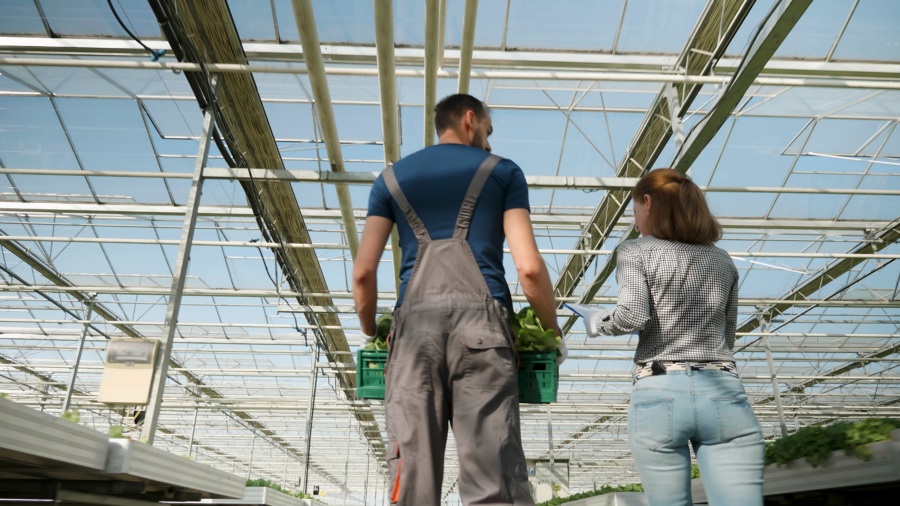
Use this list as a basis for negotiations:
- Please show us 3–5 recent facilities similar to ours in scale and technology, with customer contacts.
- Who does the design work in your company? Can we talk to the lead project engineer?
- Which engineering solutions do you propose to minimise the running costs of heating and electricity in our region?
- Do you manufacture the structures yourselves or buy them in? Please provide the material test reports.
- How do you manage the schedule? Will you provide a detailed programme with weekly reporting?
- What warranty obligations do you give for the structures, the covering and the engineering systems? What does the warranty process look like?
- Does the contract provide for service support and help with the launch? Which services does it include?
- How are the risks of missed deadlines allocated in your standard contract?
- Do you have experience with the crop we have chosen?
- What is the make-up of your permanent installation crew, and how is their qualification maintained?
Conclusion
Choosing a contractor to build a greenhouse is not simply a search for someone to do the work but a strategic decision that shapes the basis of your business for years ahead. Mistakes made at this stage are the most expensive, because correcting them takes disproportionately more resources than the initial saving.
A systematic approach based on checking competence rather than only comparing prices, together with a clear checklist of questions, moves the dialogue with a contractor from marketing promises to specific commitments and solutions. This is the most effective tool for reducing investment risk and ensuring that your greenhouse complex becomes a reliable and profitable asset rather than a source of constant problems.